Category Debt

Investors Start Weighing the Risks

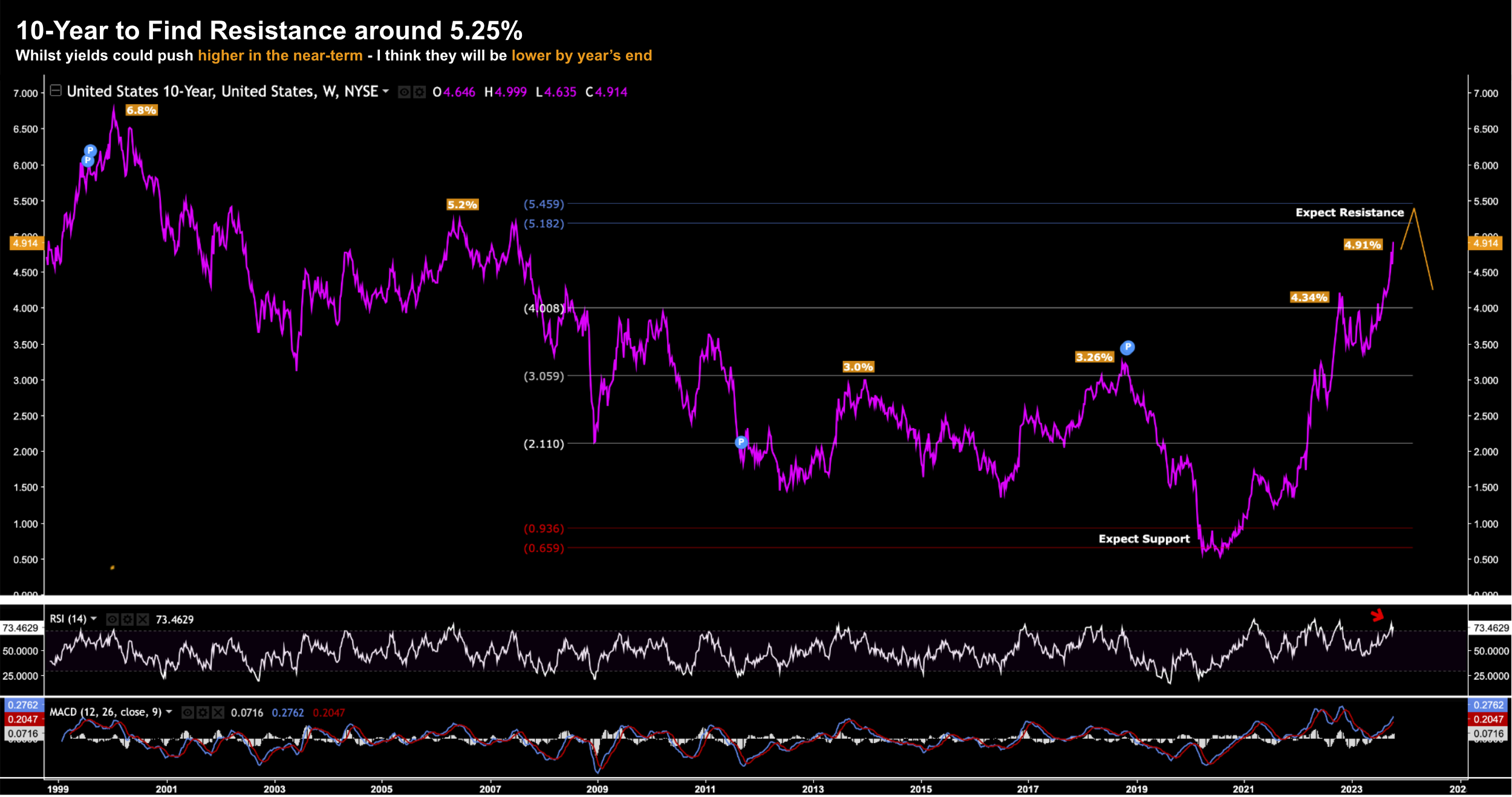
Investors have hit pause on equities - evaluating a new set of risks. For example, the S&P 500 is now trading close to the same level it was at the end of January. 8 months of gains gone! The world's largest index is up ~10% year to date... losing 2.4% this week. When you consider the S&P 500 lost ~19% last year.... it has not been a good two years. This post looks at why the outlook has deteriorated with 4 key charts: (i) 10-year yield; (ii) 10-2 yield curve; (iii) VIX; and (iv) gold - which touched $2,000 this week. What does it all mean?

Bye Bye Sugar High

Are equities finally connecting the dots? Maybe. Whilst this has been a difficult market to trade - my sense was to approach with caution. From mine, there were too many open questions. For example, when the market was trading around 4600 - my sentiment was the downside risk outweighed any upside reward. We are now ~8% lower... closer to the zone of where I felt the S&P 500 could trade. In short, valuations were stretched. Put another way, the risk premium for owning stocks wasn't there. But markets pushed higher - taunting the Fed on their "higher for longer" script.

Will a US Debt Downgrade be a ‘Bearish’ Catalyst?

Earlier this week, Fitch Ratings downgraded the U.S.' credit rating. Stocks slipped a little on the news and bond yields ticked higher. The US 10-year treasury yield is now north of 4.10%. Fitch cited “expected fiscal deterioration over the next three years” and an erosion of governance. Hard to argue. Fiscal restraint is not one of the government's strengths. But this isn't entirely new news. For example, the credit agency placed the nation’s rating on watch in May following a near-default after members of Congress butted heads over raising the debt ceiling. However, this put the wheels in motion....

Some Things Just Take Time

This week we received the latest monthly payrolls data. US employers added 209K jobs - a little lower than expected. However, the job market appears robust. One metric that deserves closer inspection are weekly hours worked. That is trending lower and could be a precursor to what's ahead. From my perspective, what we're seeing is the "Fed lag" effect of higher rates slowly tighten its vice. But these things take time and we may not see the full effects on the labor market for another 6-12 months (at a guess).