
Category Big Tech

Show Me the Money! Show Me the Money!

Show Me the Money!

Markets are shifting from AI euphoria to demanding real cash flow. Private credit cracks, circular AI financing, and stretched valuations are raising hard questions about sustainability. As growth slows and multiples compress, 2026 is shaping up to be a true “show me the money” year for investors.
When Money Becomes Mercenary When Money Becomes Mercenary

When Money Becomes Mercenary

From an index perspective, it has been a lackluster start to the year. At the time of writing, markets have made very little ground over the first 6 weeks. The good news – it”s still early. However, given the incredible…

AI Anxiety AI Anxiety

AI Anxiety

While AI remains undeniably impressive, its transition from a helpful assistant to a mission-critical necessity is facing a significant adoption gap. With daily active use remains thin, investors are beginning to question the durability of "asset-light" returns as capital expenditure soars into the hundreds of billions. This shift from software-driven scalability to hardware-heavy reinvestment suggests a major reassessment of valuations is underway, as markets weigh the probability of long-term value capture against extreme multiples.

Finding Value in Apple’s $3+ Trillion Moat Finding Value in Apple’s $3+ Trillion Moat

Finding Value in Apple’s + Trillion Moat

In the last three months of 2025, the tech sector experienced what some called a “correction”. But what is a true correction? Technicians will be quick to say a drop of 10%. But for me that doesn”t work… I would…

AI’s Big (Depreciation) Bet

Most of the Mag 7 tech giants are using an extended 5-to-6-year depreciation schedule for their massive GPU investments. Since GPUs typically have a 3-year useful life, this practice artificially inflates current earnings by reducing the reported expense. If these chips rapidly become obsolete, investors paying high multiples must question the impact on future Free Cash Flow and margins when the true depreciation expense inevitably hits. Investors are optimistic that will show very strong returns (and soon) on their half-trillion-dollar bet.

Why You Should Avoid Paying Too Much

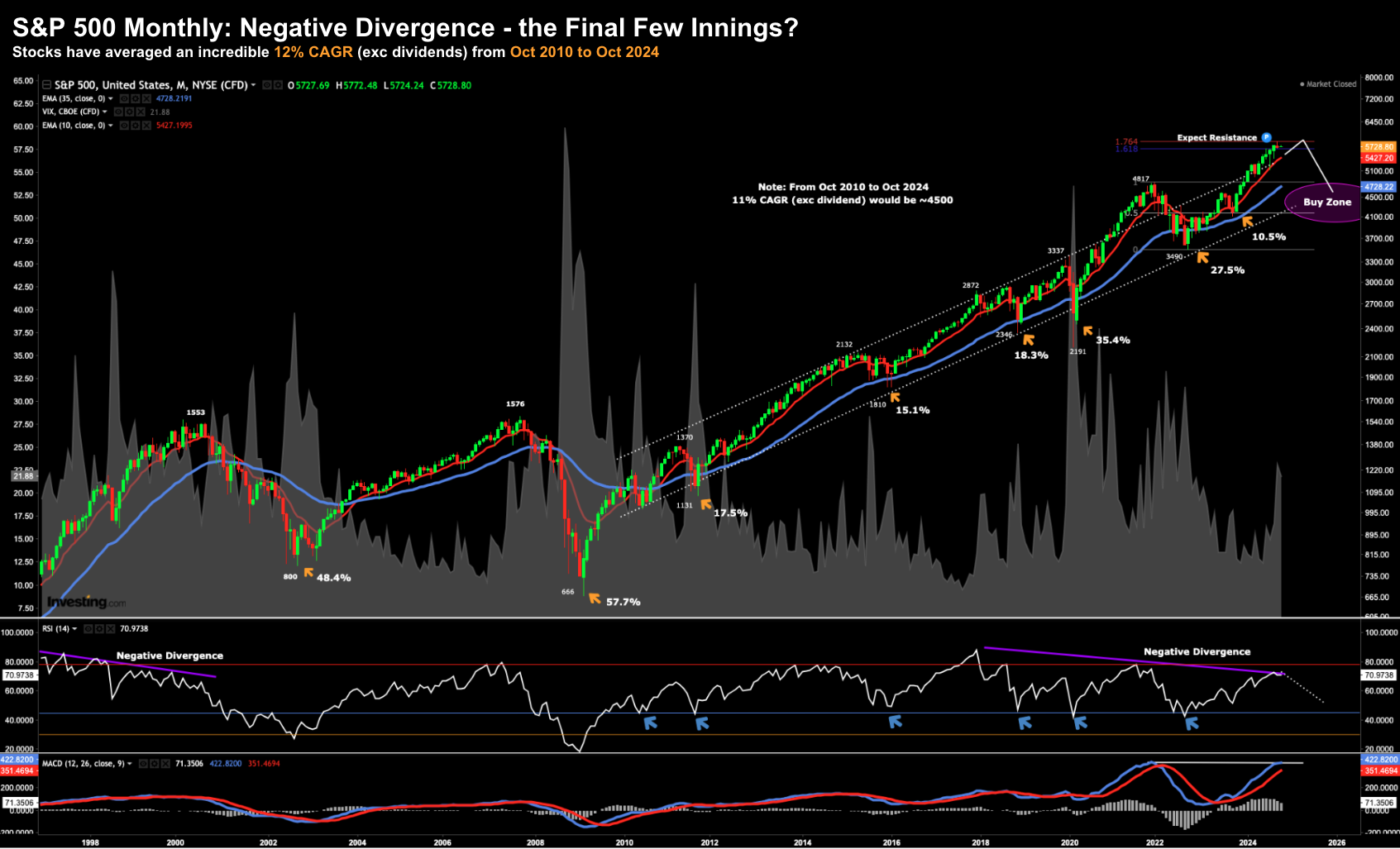
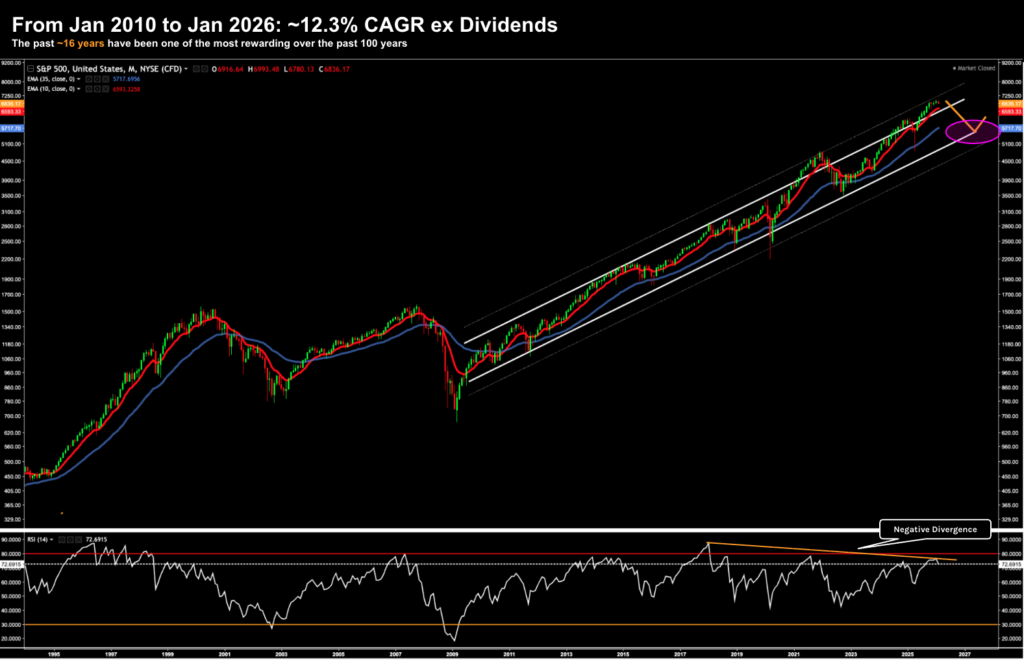
It’s very tempting to chase AI and "Mag 7" gains, but your long-term returns are ultimately determined by the price you pay. With the S&P 500 trading near 25x forward earnings and the Shiller CAPE ratio flashing warnings similar to the 2000 dot-com bubble, the market is lofty territory. History is clear: investing at such elevated valuations drastically lowers subsequent 5 and 25-year returns. While FOMO is powerful, be cautious. As a long-term investor, focus on the risk of what you could lose, not just what you might miss

Large Cap Tech: Cautious on Guidance

When Charlie Munger was asked the secret to his success - he answered “I’m rational.” Rational is not paying "33x forward earnings" for a company like Apple or Microsoft - despite their quality. Rational is also not selling the S&P 500 when it plunges to trade at just 16x forward earnings - because you are worried about a possible recession. Rational is adding exposure to high quality assets when they are at or below their long-term mean. And the more below the mean they trade - the stronger your (long-term) conviction should be.

Investor’s (Valid) Capex Concerns w/AI

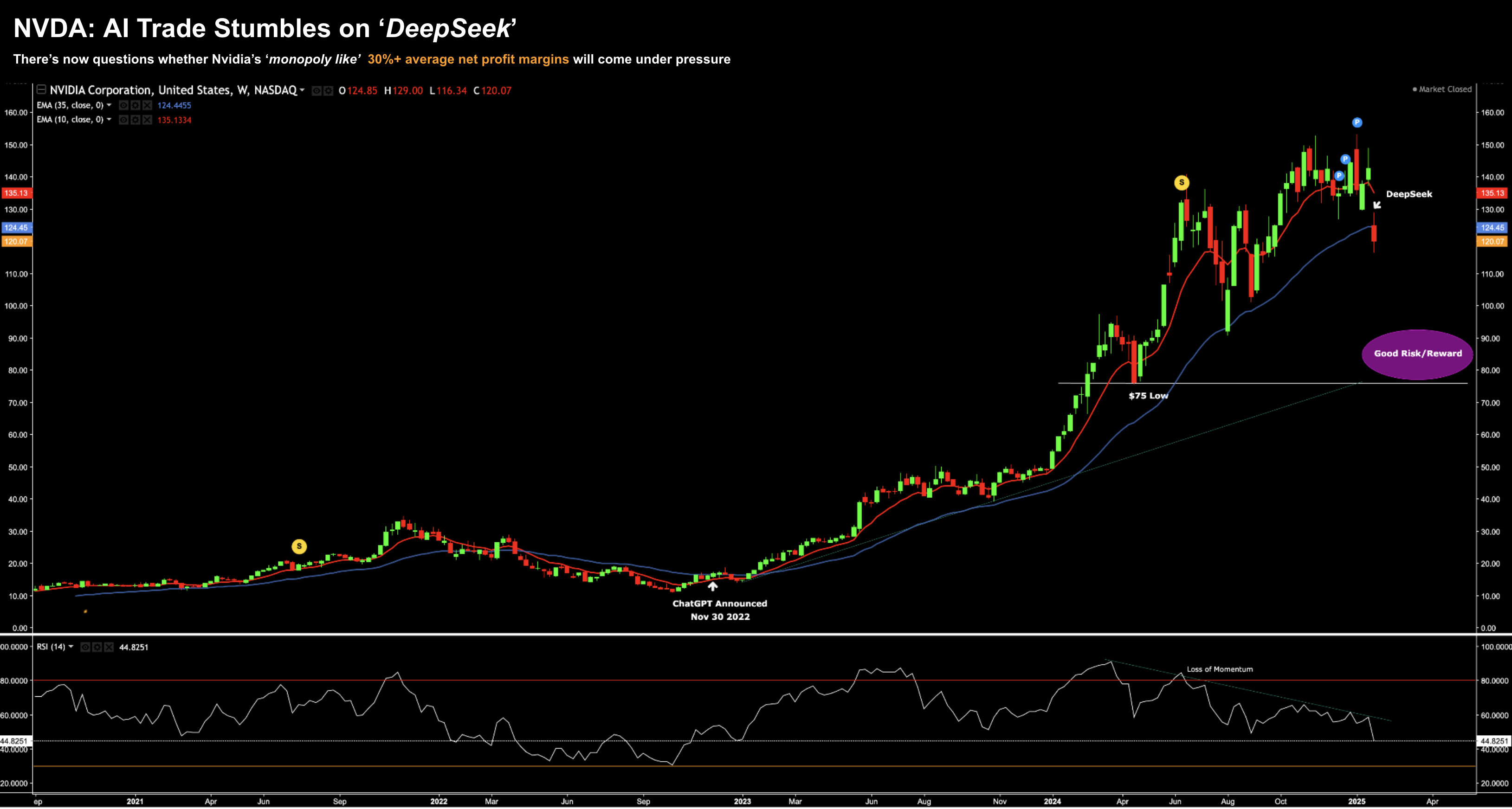
Large-cap tech's planned capex for 2025 is worrying investors. What will be the return on that capital? Never before have these companies made such large bets. Before DeepSeek, it was assumed the tech giants - with their deep pockets and almost limitless resources - would enjoy a wide moat in the AI arena. And from there, that justified the high valuation multiples. Not now. DeepSeek’s arrival challenges those long held assumptions (and valuations).

Investors Starting to Question AI’s ROIC

AI investors were caught off guard this week on news of China's ChapGPT rival "DeepSeek". It's alleged DeepSeek was developed far more cost-effectively (millions vs billions) than OpenAI's ChatGPT (and similar large language models). If true (and we don't know) - this raises questions about the sustainability of current U.S. AI infrastructure investments - forecast to top $1 Trillion next year. All of a sudden - valuations for these AI stocks are being questioned.

Stocks Pause on ‘Less than Magnificent’ Earnings

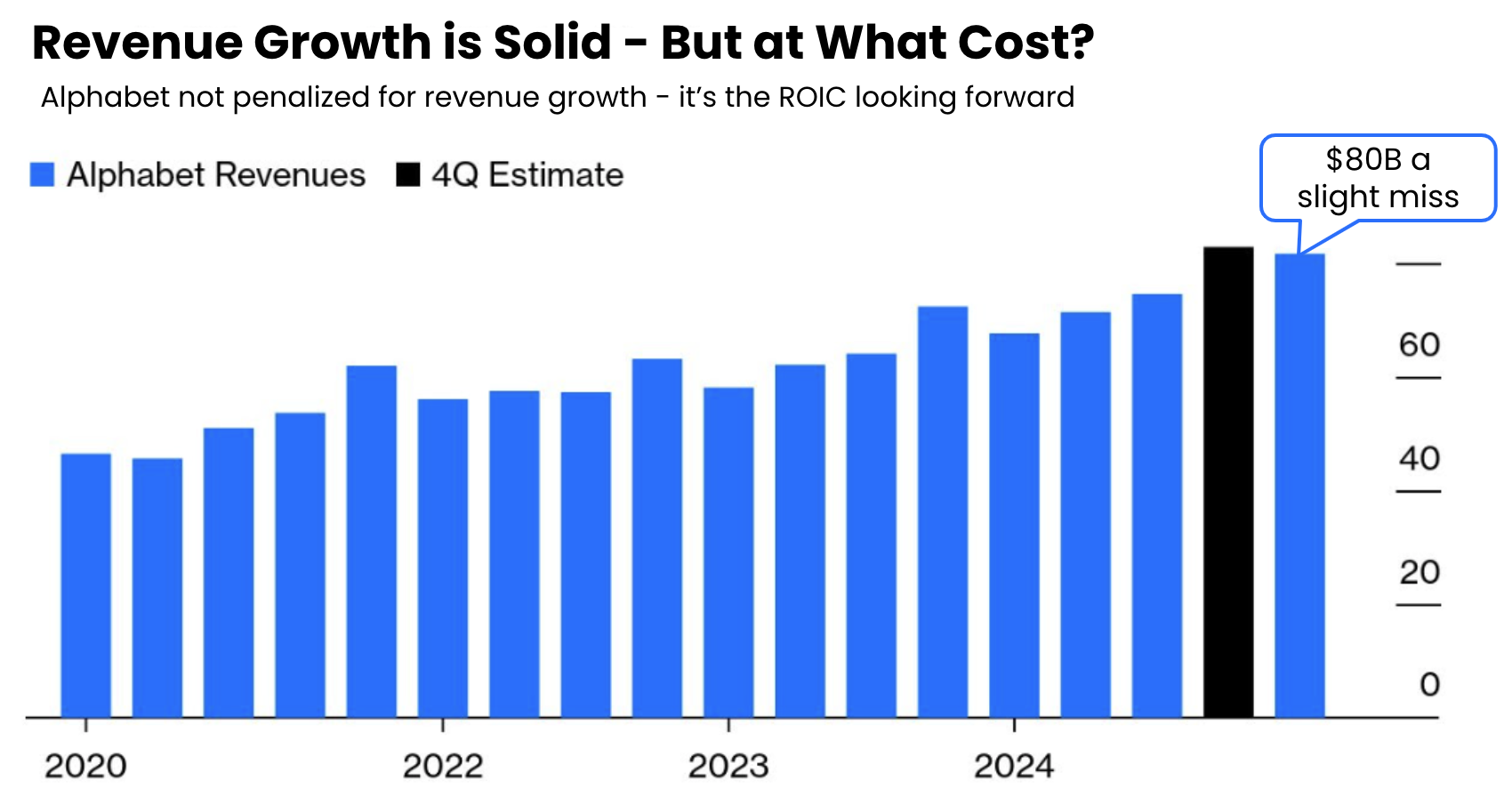
October - synonymous for delivering market jolts - passed with barely a whimper. However, it was the market's first negative month since April. Are stocks losing their mojo? In short, large cap tech earnings from five of the 'Mag 7' were less than magnificent. Meta, Apple and Microsoft all dropped post earnings. Google managed a small 5% rise initially - but gave it all back. Amazon managed hold gains of ~3%. This post talk to what the market expects from the nearly $1 Trillion in AI capex... and how their patience could be starting to wane...